# VmdtStr
Detect VMMs with faulty handling of STR exit
**NOTE:** This detection requires the VMM in question to exit on descriptor table access, otherwise it won't work!
# Showcase
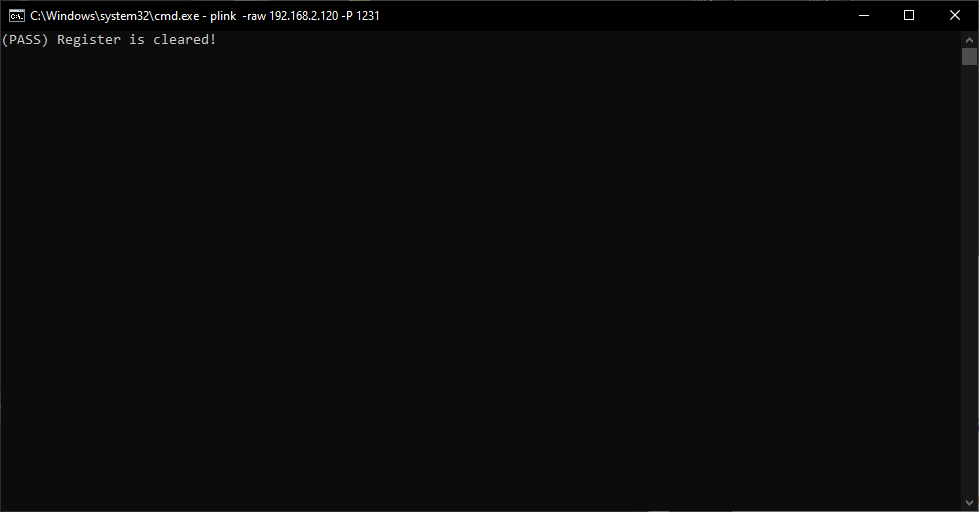
This is the output on a KVM with no nested VMM active:
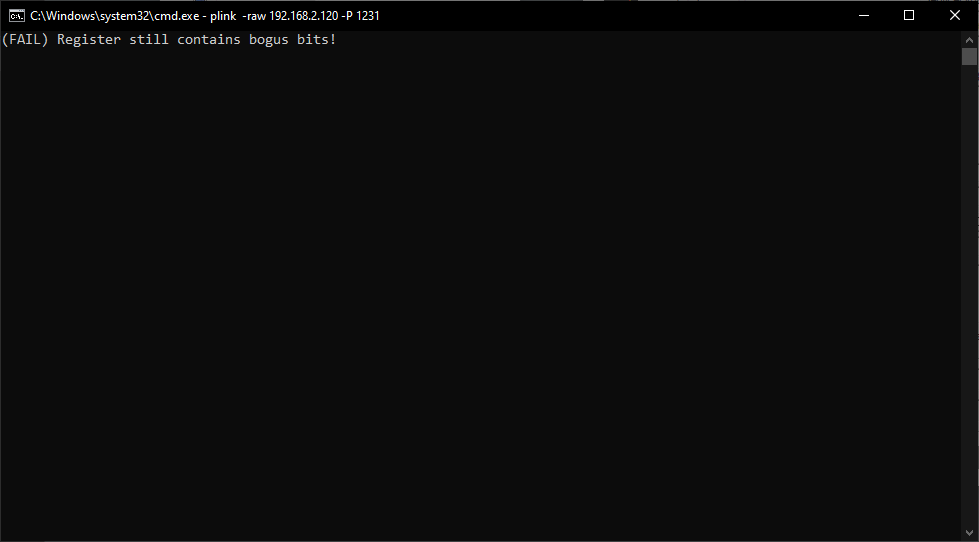
And this is with HVPP as a nested VMM:
# How it works
This demo works because some public VMMs don't emulate `STR` instruction correctly.
Let me quote the relevant part in the instruction set reference from Intel website:
```
When the destination operand is a 32-bit register, the 16-bit segment selector is copied into the lower 16 bits of the
register and the upper 16 bits of the register are cleared. When the destination operand is a memory location, the
segment selector is written to memory as a 16-bit quantity, regardless of operand size.
In 64-bit mode, operation is the *same*. The size of the memory operand is fixed at 16 bits. In register stores, the 2-
byte TR is *zero extended* if stored to a 64-bit register.
```
This is what the exit handler of HVPP is doing on an exit with reason descriptor table access.
```
oid vmexit_passthrough_handler::handle_ldtr_tr_access(vcpu_t& vp) noexcept
{
auto instruction_info = vp.exit_instruction_info().ldtr_tr_access;
cr3_guard _{ vp.guest_cr3() };
auto& low_word =
instruction_info.access_type == vmx::instruction_info_t::access_memory
? *reinterpret_cast(vp.exit_instruction_info_guest_va())
// instruction_info.access_type == vmx::instruction_info::access_register
: reinterpret_cast(vp.context().gp_register[instruction_info.register_1]); // notice how it only cares about the lower bits, i.e u16
switch (instruction_info.instruction)
{
case vmx::instruction_info_ldtr_tr_access_t::instruction_sldt:
low_word = vp.guest_segment_selector(context_t::seg_ldtr).flags;
break;
case vmx::instruction_info_ldtr_tr_access_t::instruction_str:
low_word = vp.guest_segment_selector(context_t::seg_tr).flags; // no zero extension is happening here, it only writes the lower bits and doesn't differentiate between the destination.
break;
case vmx::instruction_info_ldtr_tr_access_t::instruction_lldt:
vp.guest_segment_selector(context_t::seg_ldtr, segment_selector_t{ low_word });
break;
case vmx::instruction_info_ldtr_tr_access_t::instruction_ltr:
{
//
// After the segment selector is loaded in the task register,
// the processor uses the segment selector to locate the segment
// descriptor for the TSS in the global descriptor table(GDT).
// It then loads the segment limit and base address for the TSS
// from the segment descriptor into the task register. The task
// pointed to by the task register is marked busy, but a switch
// to the task does not occur.
// (ref: Vol2A[(LTR-Load Task Register)])
//
// TL;DR:
// LTR instruction sets busy bit in the TSS and we need to
// emulate this behavior.
//
auto selector = segment_selector_t{ low_word };
vp.guest_segment_selector(context_t::seg_tr, selector);
auto& descriptor = vp.guest_gdtr()[selector];
descriptor.access.type |= segment_access_t::type_tss_busy_flag;
}
break;
}
}
```
# Disclaimer
This has been tested using HVPP and some other public VMMs, in a KVM virtual machine.
Although i think the results on bare metal should be the same, more evaluation is required if this should be used legitimately.